We act as a commercial plumber for many local and residential businesses
Water Heater Repair & Installation in Fayetteville, GA
Hot water is an essential part of modern living. From a warm shower in the morning to running the dishwasher after dinner, your water heater works silently in the background to provide comfort and sanitation. When this system fails, it is immediately noticeable and highly disruptive. At Fayetteville Plumbing Pros, we specialize in comprehensive water heater repair and installation services. We are dedicated to ensuring that the residents and businesses of Fayetteville have reliable access to hot water year round.
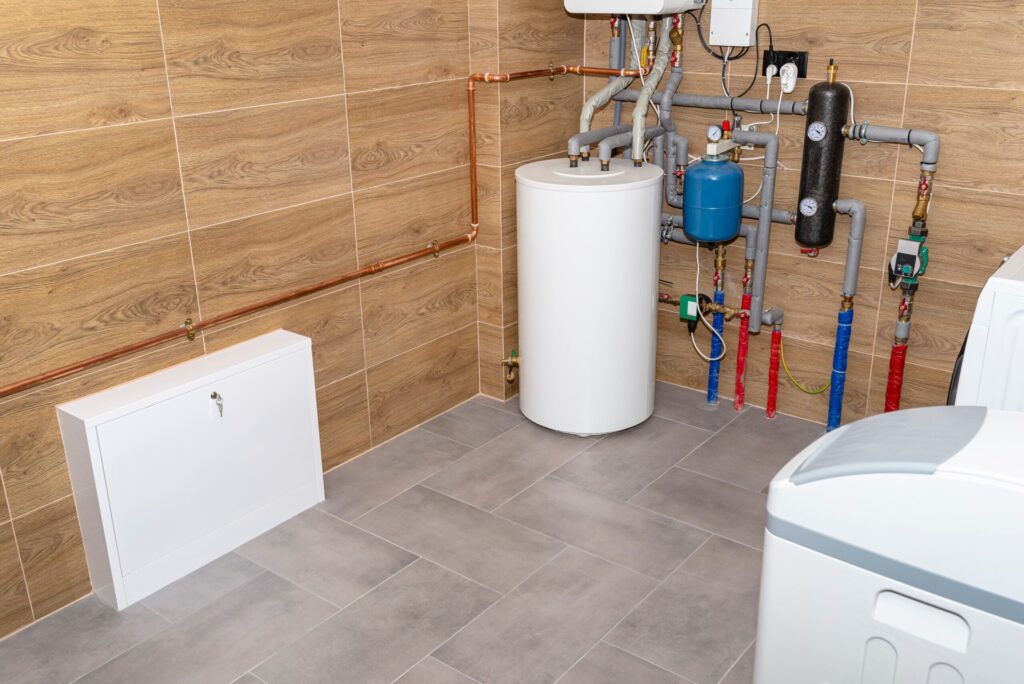
Water Heater Repair and Installation in Fayetteville, Georgia – Fayetteville Plumbing Pros
Fayetteville Plumbing Pros handles the full range of water heater work for homeowners throughout Fayetteville, Georgia and the surrounding communities. That includes water heater repair, same-day service when a unit stops working, water heater replacement, tankless water heater installation and repair, sediment flushing, anode rod service, electric water heater diagnostics, gas water heater repair, pilot light issues, and full unit swap-outs when a tank has reached the end of its life. We serve Fayetteville, Tyrone, Peachtree City, Brooks, Woolsey, and Sharpsburg. Many homes in Fayetteville were built decades ago and are still running their original tank heaters, which means we see a lot of corrosion, sediment buildup from the mineral content in area water, and aging components that are one season away from a failure. We take the time to properly diagnose the problem before recommending repair or replacement. We work cleanly, communicate clearly, and don’t leave until the system is tested and functioning the way it should. Here’s a thorough look at the water heater problems we fix and how we approach this work in Fayetteville.
Common Water Heater Problems We Fix in Fayetteville
No Hot Water or Insufficient Hot Water
Running out of hot water or having none at all is an immediate disruption to daily life. For a family in Fayetteville, losing hot water means cold showers, disrupted laundry routines, and a problem that needs to be addressed today rather than scheduled for next week. The causes range from a failed heating element in an electric unit to a malfunctioning thermostat, a tripped breaker, or a more significant internal failure in an older tank.
Recognizing the Problem
- No hot water from any fixture in the home
- Hot water runs out much faster than it used to
- Water gets warm but never reaches a comfortable temperature
- Hot water recovery time has slowed noticeably over recent months
- Electric unit stopped working after a recent storm or power fluctuation
- First person to shower gets hot water but no one else does
- Unit cycles on and off frequently without maintaining temperature
When we diagnose a no-hot-water call in Fayetteville, we check the full unit, including the thermostat settings, heating elements or burner function, electrical connections, and any error codes on newer units. On a gas heater, we check the pilot, thermocouple, and gas valve function. We don’t assume the most obvious answer is the only answer. If a fix is available, we explain it and complete it. If the unit is old enough that repair makes less sense than replacement, we tell you that directly and walk you through the options.
Leaking Water Heater
A water heater that is leaking is not something to monitor and hope it stabilizes. Even a slow drip from the base of the tank can indicate corrosion inside the tank walls, which means the problem will worsen and eventually result in a full tank failure and a flooded utility space. A leak from the top or from a connection point is often a different problem, typically a fitting or valve issue, and is usually more repairable.
Recognizing the Problem
- Water pooling on the floor around the base of the tank
- Moisture or corrosion visible on the exterior of the tank
- Dripping from the temperature and pressure relief valve
- Water around the inlet or outlet connections at the top
- Rust streaks running down the side of the tank
- Water heater leaking from top where the pipe connections enter
- Damp drywall or staining on the wall behind the unit
We assess exactly where the leak is originating before recommending anything. A leaking pressure relief valve can sometimes be replaced without touching the tank itself. A fitting that is dripping at the top is often a thread connection repair. But a tank that is leaking from the bottom, particularly in a Fayetteville home where the unit has been running for ten to fifteen years, almost always indicates internal corrosion that makes repair impractical. In those cases we move quickly to help the homeowner choose a replacement unit and complete the installation as soon as possible.
Tankless Water Heater Issues
Tankless water heaters are increasingly common in Fayetteville homes, either installed during construction or as a replacement for aging tank units. They offer real advantages in efficiency and longevity, but they’re not maintenance-free. When a tankless unit is not heating properly, producing inconsistent temperatures, throwing error codes, or failing to ignite, it needs a technician who understands how those systems work, not just someone who handles traditional tank heaters.
Recognizing the Problem
- Tankless unit producing lukewarm water instead of fully heated water
- Error code displayed on the unit’s control panel
- Hot water comes and goes in the shower without changing settings
- Unit activates but shuts off quickly and restarts repeatedly
- No ignition when the hot water tap is opened
- Flow rate seems lower than it used to be from the hot side
- Scale buildup visible on the inlet filter screen
Tankless water heater diagnostics require reading the unit’s error codes, checking the gas pressure and flow rate, testing the igniter and flame sensor, and inspecting the heat exchanger for scale buildup, which is accelerated in areas with harder water. Fayetteville’s water supply carries enough mineral content that annual or biannual descaling is a practical maintenance step for tankless owners. We handle both the repair side and advise on the maintenance schedule that keeps these units running efficiently long-term.
Rusty or Discolored Hot Water
When the hot water from the tap runs rust colored or brownish in a Fayetteville home, it’s worth figuring out the source before simply deciding to live with it or assume it’s temporary. Discolored hot water usually means something inside the system is corroding, and that process doesn’t stop on its own.
Recognizing the Problem
- Orange or brown tint in the water from hot-side fixtures only
- Metallic smell or taste in the hot water
- Rusty sediment visible in a glass of hot water when held to the light
- Discoloration clears up slightly after running the hot tap for a while
- Problem appears on all hot fixtures, not just one
- White laundry coming out of the wash with a yellowish tint
- Sediment visible in the toilet tank after a hot water flush
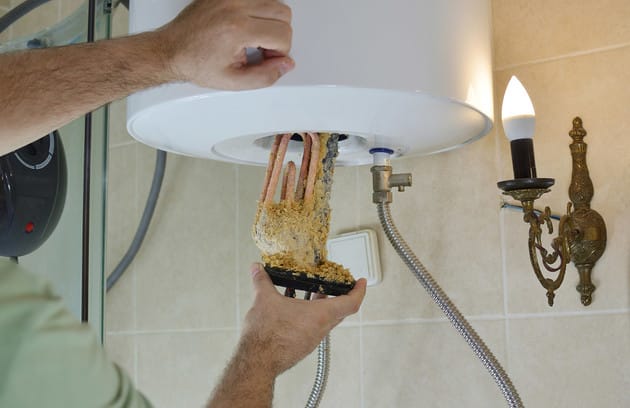
Rusty hot water in a Fayetteville home most often points to a failing anode rod inside the water heater tank. The anode rod is designed to corrode so the tank doesn’t, but once it’s fully depleted, the tank itself begins to rust from the inside. In some cases the tank is still salvageable if caught early and the rod is replaced. In others, the tank wall has already been compromised. We inspect the anode rod condition and assess the interior of the tank through the available access points to give you an accurate assessment.
Strange Noises from Water Heater
A water heater that is making loud popping, rumbling, or banging sounds is telling you something. Noise from a water heater is most often the result of sediment that has accumulated at the bottom of the tank. When the burner heats the water below that layer of sediment, the steam bubbles pushing through cause the sounds that many homeowners describe as like boiling rocks.
Recognizing the Problem
- Loud popping or cracking sounds when the heater kicks on
- Rumbling that comes and goes during the heating cycle
- Banging sound from inside the tank with no apparent cause
- Hissing from the temperature and pressure relief valve area
- Gurgling when hot water is drawn from a fixture
- Noise has gotten noticeably louder over the past few months
Sediment buildup is the most common cause of water heater noise, and flushing the tank is the first step. In Fayetteville, where water mineral content accelerates this process, regular flushing extends the unit’s service life significantly. If flushing resolves the noise, we also check the heating efficiency and element condition since heavy sediment typically reduces output as well. If the noise persists after flushing, we dig deeper into the unit’s internal components to identify the source.
Pilot Light Problems (Gas Water Heaters)
A gas water heater that won’t keep its pilot light on is a common issue and often fixable without replacing the unit. The thermocouple, which is the safety device that detects whether the pilot is burning and keeps the gas valve open, is a frequent culprit. It’s a relatively straightforward repair when that’s the cause, but the diagnostic process matters because there are other causes that need different solutions.
Recognizing the Problem
- Pilot light won’t ignite when following the lighting procedure
- Pilot lights but goes out within seconds of releasing the ignitor button
- Pilot lights but the main burner won’t come on
- Gas water heater pilot light won’t stay lit even after multiple attempts
- Weak or yellow pilot flame instead of a steady blue
- Unit has been shutting off intermittently and the pilot is out each time
If you smell gas or suspect a gas leak, go outside immediately and call 911 – this is a serious emergency that needs urgent attention from the gas company.
For pilot light problems that are not related to a gas leak, we diagnose the thermocouple, the gas valve, the pilot orifice, and the venting to determine the actual cause. A thermocouple replacement is a clean repair that restores normal function. A gas valve failure is more involved and factors into the repair vs replacement conversation. We walk through that clearly with every Fayetteville homeowner so you understand the tradeoff before making a decision.
Water Heater Not Turning On
An electric water heater that is completely unresponsive is often an electrical issue rather than a mechanical one. A tripped circuit breaker, a failed high-limit switch, or a burned-out heating element can each cause the unit to stop functioning entirely. The fix varies depending on the cause, and the wrong assumption leads to unnecessary parts expense.
Recognizing the Problem
- Electric water heater not working with no heat output and no sound of the element cycling
- Breaker for the water heater has tripped and trips again immediately when reset
- Reset button on the high-limit switch has popped out
- No power indicator on a newer unit with a control panel
- Unit stopped working after a power outage or electrical event
- One element has been replaced before and the same symptoms are back
We test the electrical connections, check both heating elements, verify thermostat function, and assess the high-limit switch before drawing conclusions. An element replacement is often the solution and can be completed efficiently when we have the right part for the unit. If the unit has had repeated electrical issues, that can point to a wiring problem upstream or a unit that is at the end of its useful service life. We give you an honest assessment rather than a parts-guessing approach.
Sediment Buildup and Poor Performance
Sediment accumulates in every tank water heater over time, but it accumulates faster in areas with harder water. In Fayetteville, the mineral content in the water supply means that homeowners who don’t flush their tanks regularly will see noticeable performance decline, including longer recovery times, reduced hot water output, and the energy inefficiency that comes with a heavy sediment layer insulating the bottom of the tank from the burner or element.
Recognizing the Problem
- Hot water that used to last through two showers now runs out halfway through one
- Heater takes much longer to recover between uses than it used to
- Rumbling or popping sounds during the heating cycle
- Energy bills have crept up without a change in usage habits
- White flakes or grit coming from hot water fixtures
- Unit is more than five years old and has never been flushed
A tank flush clears the accumulated sediment from the bottom of the heater and restores normal function in most cases. When sediment buildup has gone on long enough, the tank bottom can become permanently damaged, making replacement the better path. We assess the condition of the tank during the flush and advise honestly on what we find. For Fayetteville homeowners with aging units, we can also discuss whether upgrading to a higher-efficiency model or a tankless system makes more sense than continuing to service a tank that is overdue for replacement.
Water Heater Repair vs Replacement in Fayetteville
The repair vs replacement question comes up on almost every water heater call in Fayetteville, and the honest answer depends on several factors that we look at together rather than in isolation.
Age is the starting point. A standard tank water heater has an average service life of eight to twelve years depending on the quality of the unit and how well it’s been maintained. If a Fayetteville homeowner calls us about a water heater that is ten years old and throwing a fault, repair may buy another year or two but replacement is likely coming soon regardless. Spending significantly on a repair for a unit that old rarely makes financial sense.
The type of failure matters too. A failed thermocouple on a gas unit that is six years old and otherwise in good shape is an easy repair call. A tank that is actively corroding from the inside and leaking at the base is not repairable regardless of the unit’s age. We look at both the specific failure and the overall condition of the unit before recommending anything.
Multiple failures in a short period are a signal. If a Fayetteville homeowner has had us out for one repair and is now calling about a different problem on the same unit within a year, that pattern suggests the unit is degrading in multiple areas and repair is becoming a diminishing return.
Efficiency is another consideration. A tank heater that is operating on older technology and running longer heat cycles than necessary is costing more to operate than a newer unit would. When the repair on an older unit is significant, it’s worth comparing that cost to the difference in operating efficiency that a newer unit would provide over its service life.
For Fayetteville homes where the unit is eight to ten years old, has moderate corrosion visible on the exterior, and is showing its first significant failure, we typically have a direct conversation about whether replacement is the more practical path. We don’t push a new unit when repair is clearly the right answer, and we don’t keep patching a unit that has run its course.
Tankless Water Heater Installation and Repair
Tankless water heaters have become a popular choice for Fayetteville homeowners who want to move away from a bulky tank heater that runs whether or not hot water is being used. The core advantage of a tankless system is that it heats water on demand, which eliminates standby heat loss and can reduce energy consumption significantly for households that use hot water in concentrated sessions rather than continuously throughout the day.
We install both gas-fired and electric tankless units in Fayetteville homes and advise homeowners on which type makes more sense based on their existing infrastructure. A gas tankless unit requires adequate gas supply pressure and proper venting, while an electric unit typically requires a dedicated high-amperage circuit and may need a panel upgrade in older Fayetteville homes that don’t have the available capacity.
For repair, tankless units require someone who can read the error codes and understand what they’re pointing to. Common issues include scale buildup on the heat exchanger, igniter failure, flow sensor problems, and venting obstructions. We’ve worked on the major brands installed in this area and carry diagnostic knowledge that lets us move efficiently rather than replacing components at random.
One real consideration for Fayetteville is the mineral content in the water supply. Tankless units are more sensitive to scale than tank heaters because the heat exchanger has narrow water passages that can restrict with buildup. Annual descaling is a practical step for most Fayetteville tankless owners, and we advise on a maintenance schedule when we complete an installation so you’re not finding out about it the hard way.
Water Heater Installation Services in Fayetteville
Whether you’re replacing an aging tank heater or upgrading to a tankless system, the installation process matters. A properly installed water heater is safer, performs better, and lasts longer than one that was installed with corners cut.
We start by assessing the installation location, including the existing gas or electrical supply, the venting or exhaust configuration, and the condition of the cold-water inlet and hot-water outlet connections. If any of those components need updating to work correctly with the new unit, we address that as part of the installation rather than leaving you with a new heater connected to outdated supply lines or a venting configuration that doesn’t meet current standards.
For the installation itself, we set the unit, make all connections, test for leaks at the water and gas or electrical connections, verify the pressure relief valve is installed and properly directed, and run the unit through a full heating cycle before we leave. We set the thermostat to a temperature that balances performance with safety, and we walk you through the basic operation and shutdown procedure so you know how to respond if something comes up between service visits.
For tankless installations, we also install the required isolation valves that allow the unit to be serviced without shutting off water to the whole house, which is a step some installation crews skip but that makes future maintenance significantly more practical.
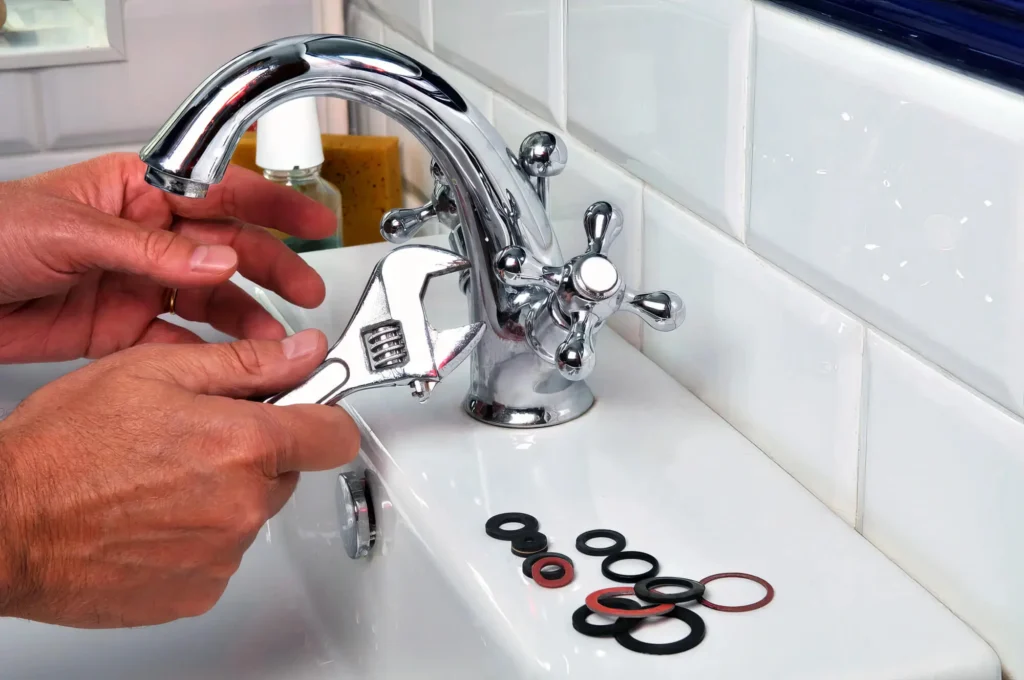
Why Fayetteville Homeowners Choose Fayetteville Plumbing Pros for Water Heater Service
Local Expertise with Fayetteville Homes and Water Conditions
We’ve serviced water heaters across Fayetteville for years, and that experience shapes how we approach every call. We know that older neighborhoods in Fayetteville often have tank heaters that have never been flushed and are operating well past their expected service life. We know the mineral content in Fayetteville’s water supply accelerates sediment buildup, and we factor that into our diagnosis and service recommendations. A homeowner near the Kenwood area called us about declining hot water output and we found a tank with four inches of sediment that no one had addressed since installation. That’s local knowledge at work.
Meticulous Diagnostics and Root-Cause Fixes
We don’t guess our way through a water heater call. Before recommending repair or replacement, we fully assess the unit, check the related plumbing and supply connections, and identify the actual cause of the problem. A homeowner who called us about a unit that kept running without maintaining temperature expected us to replace the thermostat. We found that the inlet dip tube had collapsed, which was mixing cold water into the tank continuously and preventing the unit from ever reaching setpoint. The right diagnosis saved money and fixed the actual problem.
Respect for Your Home and Family During the Job
Water heater work is often done in tight utility spaces, closets, or garages, and we take care to work cleanly in those areas without creating a mess. We lay down protective coverings, handle the old unit carefully during removal, and leave the space cleaner than we found it. We communicate at every stage and don’t start the installation until we’ve confirmed the homeowner understands what’s being done and is satisfied with the plan. No surprises, no rushing, no mess left behind in your Fayetteville home.
Skilled with Both Traditional and Tankless Systems
We work on the full range of water heater types you’ll find in Fayetteville homes. That includes older atmospheric-vent gas heaters, direct-vent and power-vent models, standard electric units with single and dual elements, and gas-fired and electric tankless systems. When a homeowner is considering switching from a tank to a tankless system, we can assess the existing infrastructure honestly, explain what the switchover involves, and complete the installation correctly. We don’t recommend tankless to every homeowner because it isn’t the right fit in every situation.
Fast Same-Day Response When You Need Hot Water Now
We understand that losing hot water is not a problem most Fayetteville households can wait several days to address. We prioritize water heater calls and do our best to schedule same-day service when a unit has stopped working entirely or is actively leaking. A family in Peachtree City called us on a Monday morning after their unit failed over the weekend. We were there that afternoon and had hot water restored by evening. We carry common parts for the most frequently serviced units so we’re not leaving to find a part and coming back another day.
Our Water Heater Service Process in Fayetteville
1. You Reach Out
Tell us what’s happening with your water heater. Whether it’s stopped producing hot water, is making unusual sounds, or is actively leaking, give us the details including the approximate age and type of unit if you know it. That information helps us arrive prepared.
2. We Schedule and Arrive
We find the earliest available time that works for you and confirm it. For situations where hot water is completely out, we prioritize the call. We give you a realistic arrival window and communicate if anything changes rather than leaving you waiting without an update.
3. Thorough Diagnosis and Clear Explanation
We assess the full unit when we arrive, not just the obvious symptom. We check the components, connections, age indicators, and overall condition of the heater. Then we tell you exactly what we found, what’s causing the problem, and what the repair or replacement involves, including the tradeoffs if both paths are worth discussing.
4. Repair or Installation
We complete the agreed work carefully and with the right materials. For repairs, we use quality parts that are appropriate for the unit. For installations, we handle all connections, venting, and commissioning properly. We don’t cut corners on the behind-the-scenes steps that determine how long the work holds up.
5. Final Testing and Cleanup
Before we leave, we run the unit through a full cycle, verify hot water is reaching your fixtures at the right temperature, and confirm there are no leaks at any connection point. We clean up the work area, remove the old unit if it’s been replaced, and walk you through basic operation and maintenance tips. Your Fayetteville home is left in good shape and your water heater is working correctly.
Water Heater Service Area in and Around Fayetteville, Georgia
We provide water heater repair and installation throughout Fayetteville and the surrounding areas. Our service in Fayetteville covers the full city, including established neighborhoods and newer developments, and we extend to nearby communities without any gap in quality or response time.
- Fayetteville, GA
- Tyrone, GA
- Peachtree City, GA
- Brooks, GA
- Woolsey, GA
- Sharpsburg, GA
- Senoia, GA
- Fairburn, GA
- Palmetto, GA
- Union City, GA
Water heater service in Fayetteville means understanding the specific housing stock, water conditions, and infrastructure in this part of Fayette County. We’re not a regional company that shows up in Fayetteville once in a while. We work here regularly, and that means faster diagnosis, better awareness of what’s common in local homes, and a more accurate first assessment when we arrive. That’s what local water heater service actually looks like.
Professional Water Heater Repair vs DIY Attempts
Water heaters involve multiple systems working together, including water, gas or electricity, pressure, and heat, and the risks when something goes wrong with any of those systems are real. This is one area where DIY attempts can create problems that are more expensive and more dangerous than the original issue.
Electrical water heaters operate on 240-volt circuits. A mistake while working on the electrical connections or replacing an element can result in a serious shock. This isn’t the same as replacing an outlet on a standard 120-volt circuit. The procedures matter and the risks are significantly higher.
Gas water heaters carry the additional risk of gas exposure if a fitting is disturbed and not properly resealed. Even a small gas leak at a fitting connection can build up in a confined utility space and create a hazard. Testing gas connections properly requires specific tools, not just a visual inspection.
Scalding is another real risk when working on a hot water system that hasn’t been fully drained and cooled. The temperature and pressure inside a water heater tank can cause serious burns when a connection is opened without following the correct depressurization procedure first.
In Fayetteville homes where units are older and sediment levels are high, the risk of disturbing a corroded connection during a DIY repair is elevated. A fitting that has been in place for fifteen years may be more fragile than it appears and can fail when manipulated.
Modern tankless water heaters also have electronic controls and complex heat exchanger systems that require specific diagnostic knowledge to work on safely. Resetting or replacing components on a tankless unit without understanding the system can create new fault conditions or leave the root problem unaddressed.
Calling us for water heater service in Fayetteville means the job is handled by someone who does this work every day, with the correct tools and the right knowledge of the unit type. That protects your home, your family, and the investment you’re making in the repair or replacement.
Plumbing Pro Services
Complete Plumbing Care for Your Entire Home
Whether it’s the kitchen, bathroom, or sewer line, we have the tools and training to handle any challenge your plumbing system throws at us.
We Deliver Expert Results
Don’t gamble with your plumbing. We combine years of experience with modern technology to deliver lasting repairs and installations. Our team respects your time and your property.
- Fixture Installation
- Leak Detection
- Modern Diagnostics
- Drain Cleaning
Frequently Asked Questions About Water Heater Repair and Installation in Fayetteville
Water heater repair in Fayetteville?
Yes, we handle water heater repair in Fayetteville for both gas and electric units, as well as tankless systems. Whether you have no hot water, a leaking unit, a pilot that won’t stay lit, or a unit making noises, we diagnose the issue, explain what we find, and complete the repair correctly. We prioritize water heater calls because losing hot water affects your whole household.
How much does water heater replacement cost in Fayetteville?
The total investment for replacing a water heater in Fayetteville depends on the unit type, size, and fuel source, as well as the specifics of your installation. A standard tank replacement is typically more straightforward than switching to a tankless system, which may require gas line or electrical upgrades. When we assess your current unit and discuss your options, we give you a clear breakdown of what the replacement involves so you can make an informed decision.
Do you install tankless water heaters?
Yes. We install gas-fired and electric tankless water heaters in Fayetteville homes and advise on which type and size makes sense for your household. We assess the existing gas supply or electrical panel capacity, explain what the installation requires, and complete the work correctly, including the proper venting configuration and isolation valves for future maintenance. We also service and repair tankless units that are already installed.
What should I do if I have no hot water?
First, check the circuit breaker for an electric unit or verify the pilot light on a gas unit. If the breaker is tripped, reset it once. If it trips again immediately, don’t reset it again. If the pilot light is out, follow the manufacturer’s relighting instructions carefully. If neither of those steps restores hot water, or if the unit is leaking or making unusual sounds, contact us. Attempting to troubleshoot beyond those steps without proper knowledge can create additional problems.
How long does water heater installation take?
A standard tank water heater replacement in a Fayetteville home typically takes two to three hours from arrival to completion, including draining and removing the old unit, setting the new one, making all connections, and testing. Tankless installations take longer, usually three to five hours depending on whether any gas or electrical infrastructure needs to be updated. We give you a realistic time expectation when we schedule the work so you can plan accordingly.
Do you work on older homes in Fayetteville?
Absolutely. Many of the homes we service in Fayetteville were built in the 1970s, 1980s, and 1990s, and we’re very familiar with the water heater setups and surrounding plumbing in those houses. Older supply line connections, aging shut-off valves, and original venting configurations are things we see regularly and know how to address as part of a replacement or repair job.
Signs my water heater needs replacement?
The most common signs that replacement is the better path in Fayetteville include a unit that is ten years old or older, visible corrosion or rust on the tank exterior, water pooling around the base of the tank, repeated heating failures in a short time span, significantly reduced hot water output that doesn’t improve with servicing, and discolored water that points to internal tank corrosion. When two or more of these are present, repair typically doesn’t make economic sense.
Can you fix no hot water as an emergency in Fayetteville?
Yes. We treat complete hot water outages as priority calls in Fayetteville, especially for households with children or elderly residents who depend on reliable hot water. We do our best to respond same day and carry parts for common unit types so repairs can often be completed in a single visit. When replacement is needed, we discuss options and move as efficiently as possible to restore service.
Is rusty hot water from taps serious?
Rusty hot water in a Fayetteville home is worth investigating promptly. When the discoloration appears only on the hot side, the source is almost always the water heater, either a depleted anode rod or internal tank corrosion. If the anode rod is still replaceable and the tank hasn’t been compromised, addressing it early can extend the unit’s life. If the tank is corroding internally, that discoloration will worsen and the tank will eventually fail. Contact us so we can assess the actual cause.
Do you repair water heaters for condos in Fayetteville?
Yes. We handle water heater repair and installation in both single-family homes and multi-unit properties in and around Fayetteville. Condos often have smaller units, closet-mounted heaters, or shared water supply lines that require specific attention. We’re familiar with those setups and work efficiently in the tighter spaces that condo installations typically involve.
What causes a water heater to make loud noises?
Loud popping, rumbling, or banging from a water heater in a Fayetteville home is almost always sediment that has accumulated at the bottom of the tank. As the burner heats water below the sediment layer, steam bubbles force their way through and create those sounds. Flushing the tank removes the buildup and typically resolves the noise. If it doesn’t, we investigate further to rule out other causes like a failing heating element or a water hammer issue in the supply line.
Fayetteville’s Water Heater Repair and Installation Experts
Fayetteville Plumbing Pros handles the full range of water heater work throughout Fayetteville, Georgia and the surrounding communities of Tyrone, Peachtree City, Brooks, Woolsey, and Sharpsburg. From same-day repair on a unit that has stopped working to full replacement with a new tank or tankless system, we approach every job with thorough diagnostics, honest recommendations, and clean professional work. Fayetteville homeowners can count on us for straightforward answers and a job done right the first time.
Reach out to us for assistance.
Zip codes we serve: 30214, 30215, 30290, 30269, 30270, 30205, 30277, 30276